









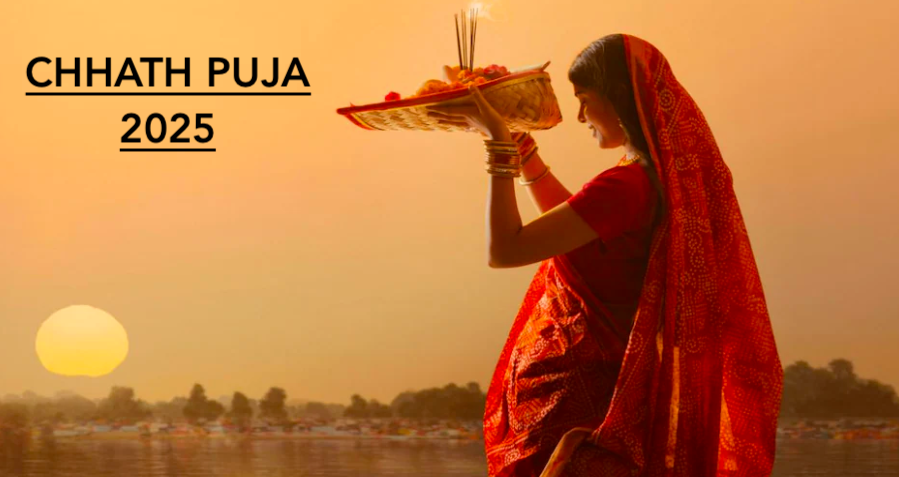
Chhath Puja, one of the most ancient and revered Hindu festivals, is observed with deep devotion to the Sun God (Surya) and his consort Usha (Chhathi Maiya).
The festival is celebrated approximately a week after Diwali, typically in October or November, during the Hindu month of Kartika. It holds immense cultural and spiritual significance in the states of Bihar, Jharkhand, Uttar Pradesh, and certain regions of Nepal, where it is celebrated with great enthusiasm and adherence to tradition.
Historical and Religious Context
The roots of Chhath Puja can be traced to Vedic traditions that emphasized worship of the elements, particularly the Sun, as the source of energy, health, and prosperity. References to solar worship are found in ancient scriptures such as the Rigveda, which highlight the Sun’s role as the sustainer of life. Mythological connections also enrich the festival’s background.
In one legend, Karna, the son of Surya and Kunti, is described as a devout worshipper of the Sun, performing daily prayers while standing in water. In another account from the Ramayana, Lord Rama and Sita, upon returning to Ayodhya after exile, are believed to have observed rituals similar to Chhath Puja to express gratitude to the Sun God. Such associations illustrate the festival’s deep roots in India’s spiritual traditions.
Rituals and Observances
Chhath Puja is a four-day celebration, marked by strict fasting, purity, and reverence. Devotees, known as Vratis, maintain rigorous discipline throughout the period.
- Day 1 – Nahay Khay: The first day involves purification through bathing in holy rivers or natural water bodies. Devotees consume only a single meal prepared without onion, garlic, or salt.
- Day 2 – Kharna: Devotees observe a complete fast without water throughout the day, breaking it in the evening after sunset with a simple offering of jaggery-based pudding (kheer), fruits, and chapatis.
- Day 3 – Sandhya Arghya: On this day, devotees gather along riverbanks or ponds to offer arghya (water offering) to the setting sun. The atmosphere comes alive with devotional songs, traditional music, and the lighting of thousands of lamps that illuminate the waters.
- Day 4 – Usha Arghya: The final day begins before dawn. Devotees offer prayers and water to the rising sun, symbolizing hope, renewal, and gratitude. The fast concludes after this morning ritual.
Cultural and Environmental Importance
Apart from its deep religious value, Chhath Puja underscores the interconnectedness of humanity and nature. The rituals promote environmental purity, as offerings are made using eco-friendly materials such as clay pots, bamboo baskets, and fruits. Community involvement is also a hallmark of the celebration, with collective efforts to clean riverbanks and construct temporary ghats, fostering unity and mutual cooperation.
Essence of the Festival
What sets Chhath Puja apart is its emphasis on discipline, austerity, and purity rather than idol worship. The devotees’ commitment to fasting and ritual cleanliness reflects determination, devotion, and humility. It is both a spiritual purification and a cultural reaffirmation of faith in the life-giving power of nature.
Chhath Puja stands as a testament to India’s timeless traditions, blending devotion and environmental awareness. As the rising sun’s golden rays fall upon the worshippers on the concluding morning, they illuminate a scene of serenity and faith—a profound reminder of the eternal relationship between humankind and the natural world.